Mise à jour le 13 April 2026
La Fabrique de la Cité and Leonard organized a study trip to Venice, Italy, in June 2025, to examine the vulnerabilities and adaptation strategies of an exemplary coastal city built between land and sea.
A city of water, an archetype of the imagination and a structure that meets fundamental anthropological needs. […] I believe in the future of cities of water, in a world populated by countless Venices1.
In 1974, Italo Calvino described Venice in these terms.
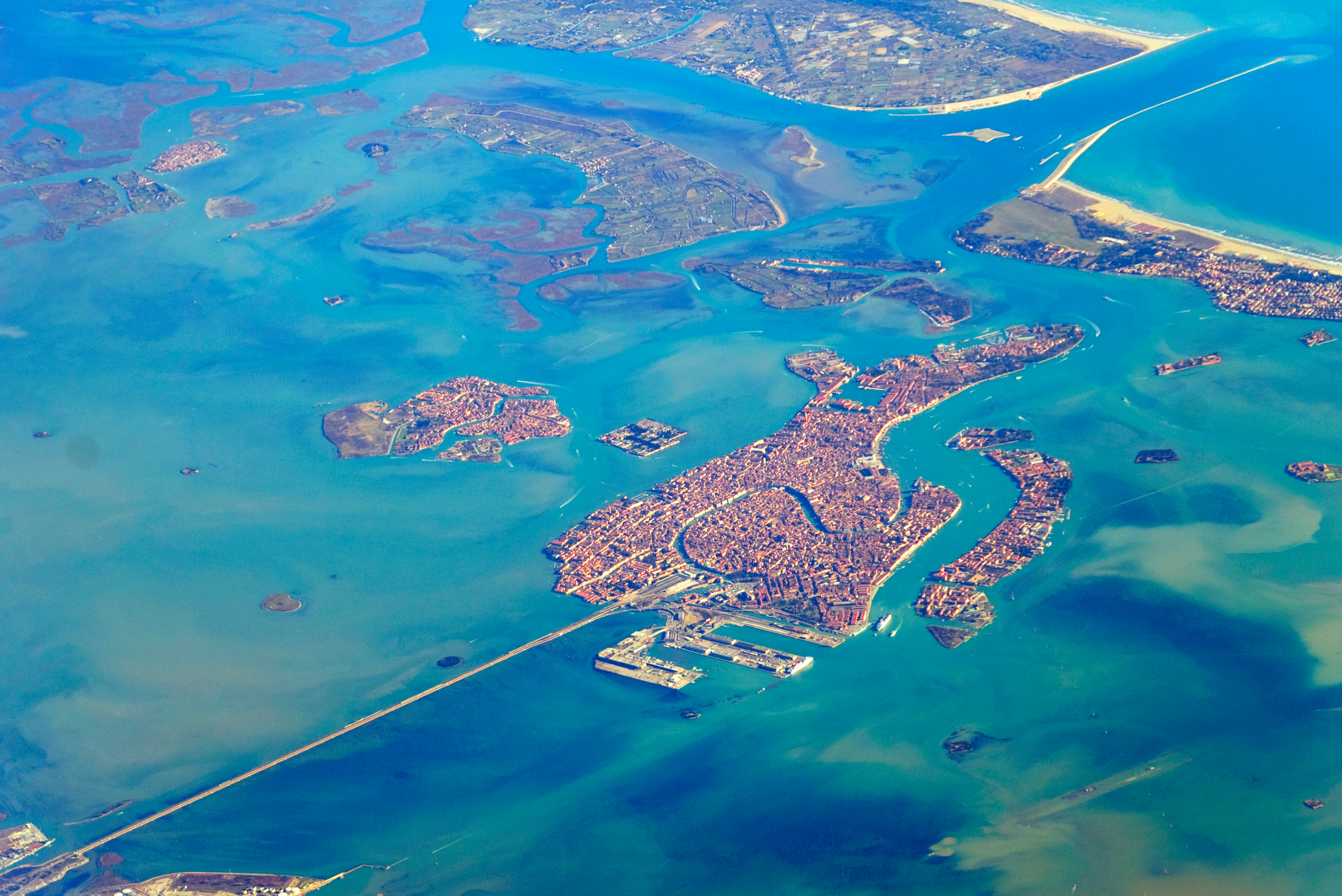
Venice’s special relationship with water is based on a geographical, economic, and cultural reality that makes the presence of water in the city a condition of its existence. The lagoon, whose canals gave the city its “fish” shape, has for centuries been home to activities that take advantage of this relationship with the marine world (trade, shipbuilding, and fishing): an inextricable link between Venice and water symbolized by the marriage to the sea ceremony (“sposalizio al mare”). These elements document the construction of a city in harmony with its environment, whose 118 islands have gradually become specialized by function.
However, water, once a protective element, is gradually becoming a threat to Venice. The disrupted relationship between the lagoon and its inhabitants, reflecting more broadly the disruption of the global climate, is endangering the city.
On July 31st 2023, UNESCO officially recommended that Venice be placed on the list of World Heritage in Danger. Faced with rising sea levels and hyper-tourism – phenomena that threaten many coastal areas on a global scale – Venice must deal with the concrete repercussions of these events on the city and its inhabitants. While frequent flooding threatens Venetian buildings, the waves of tourists increase the cost of living and housing and put a strain on traffic flow. Thinking the futures of Venice: what future for vulnerable coastal cities? The near monopoly of tourism on the local economy meansthat other sectors of activity, particularly industry, are runningout of steam. This decline feeds the Venetian city’s historic fears of its own decay.
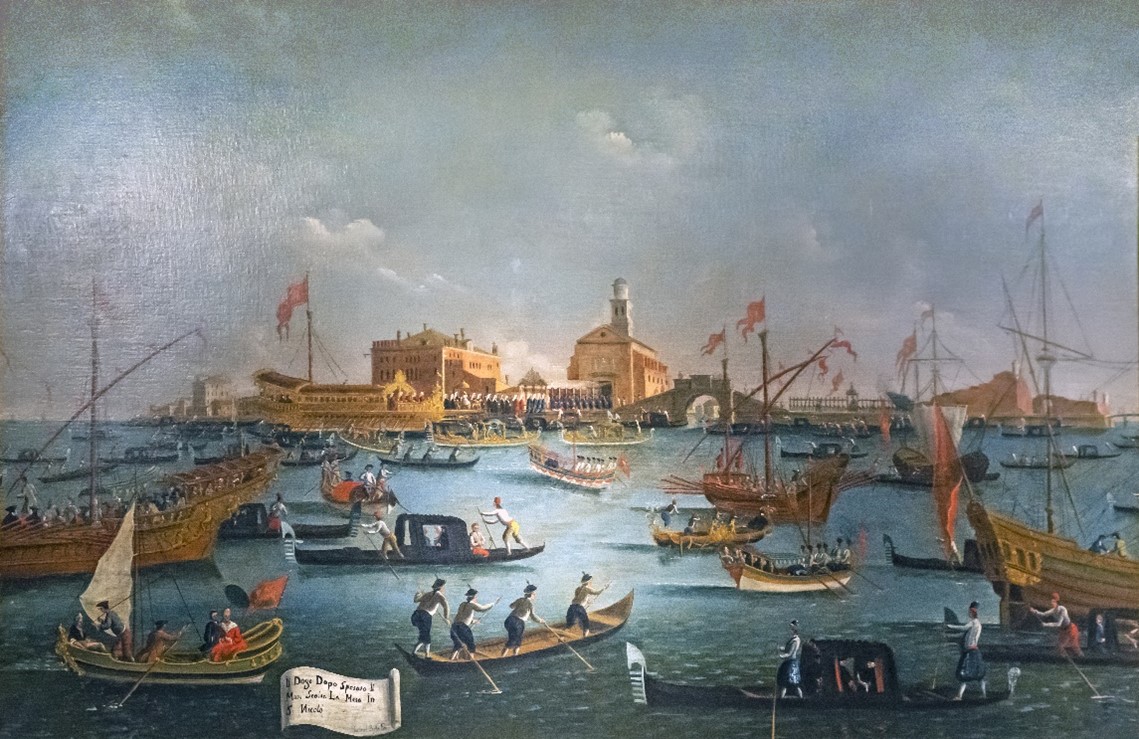
Since the dissolution of the Republic of Venice by its Great Council in 1797, the former city of the Doges has been struggling with a de facto economic and political weakening, which it has been trying to counteract in fits and starts over the last centuries.
In the past, Venice has cleverly kept itself afloat, but today it must deal with the global challenges of the Anthropocene2 and reconcile the divergent perceptions of its stakeholders; For Paolo Costa, its former mayor, there are two Venice: that of the tourists, the historic Venice, and that of the inhabitants, the metropolitan community of Venice. The two Venice refer to different economic, demographic and architectural realities. But the divisions don’t stop there. Within the population itself, tensions arise between utilitarians and conservatists on the topic of the lagoon3.
The interdependence of ecological, demographic and economic factors means that the current issues have to be considered as a whole. With this in mind, Venice is engaged in a delicate balancing act to carry out its objectives. To achieve this, the city strives to make adaptation its watchword, and in doing so, becomes the symbol of a constant quest for balance on an urban scale. La Fabrique de la Cité set out on the trail of this equilibrium during an urban expedition from June 4th to 6th 2025, accompanied by experts and decision-makers from a variety of backgrounds.
3 résultats
Calvino, Italo. Venezia archetipo e utopia della città acquatica. Milan : Arnoldo Mondadori Editore, 1995 (2nd ed.)
According to the CNRS, “The term ‘Anthropocene’ refers to the new geological epoch we have recently entered, characterized by the unprecedented pressure that humans are putting on the Earth’s ecosystem.” https://www.inee.cnrs.fr/fr/lanthropocene
The former see the lagoon as a resource area from which the fruits must be extracted. The latter advocate lagoon conservation for itself, for the sole purpose that it exists and therefore, must be protected.