




With its 47 million inhabitants, Spain is one of the most populous countries in Europe. The country is divided into 17 autonomous communities1 – Andalusia, Galicia, Catalonia, etc. – with varying degrees of self-government. The Basque Country has one of the highest levels of self-government. In particular, the Basque government levies most taxes, including income tax, corporation tax, VAT, and estate and inheritance taxes. In return, the Basque government pays the Spanish state a quota, known as the “cupo,” which is negotiated every five years and currently amounts to 6.25 % of the Basque Country’s GNP. This payment contributes to all expenditures that fall outside the Basque government’s remit, such as defense and diplomatic representation2.
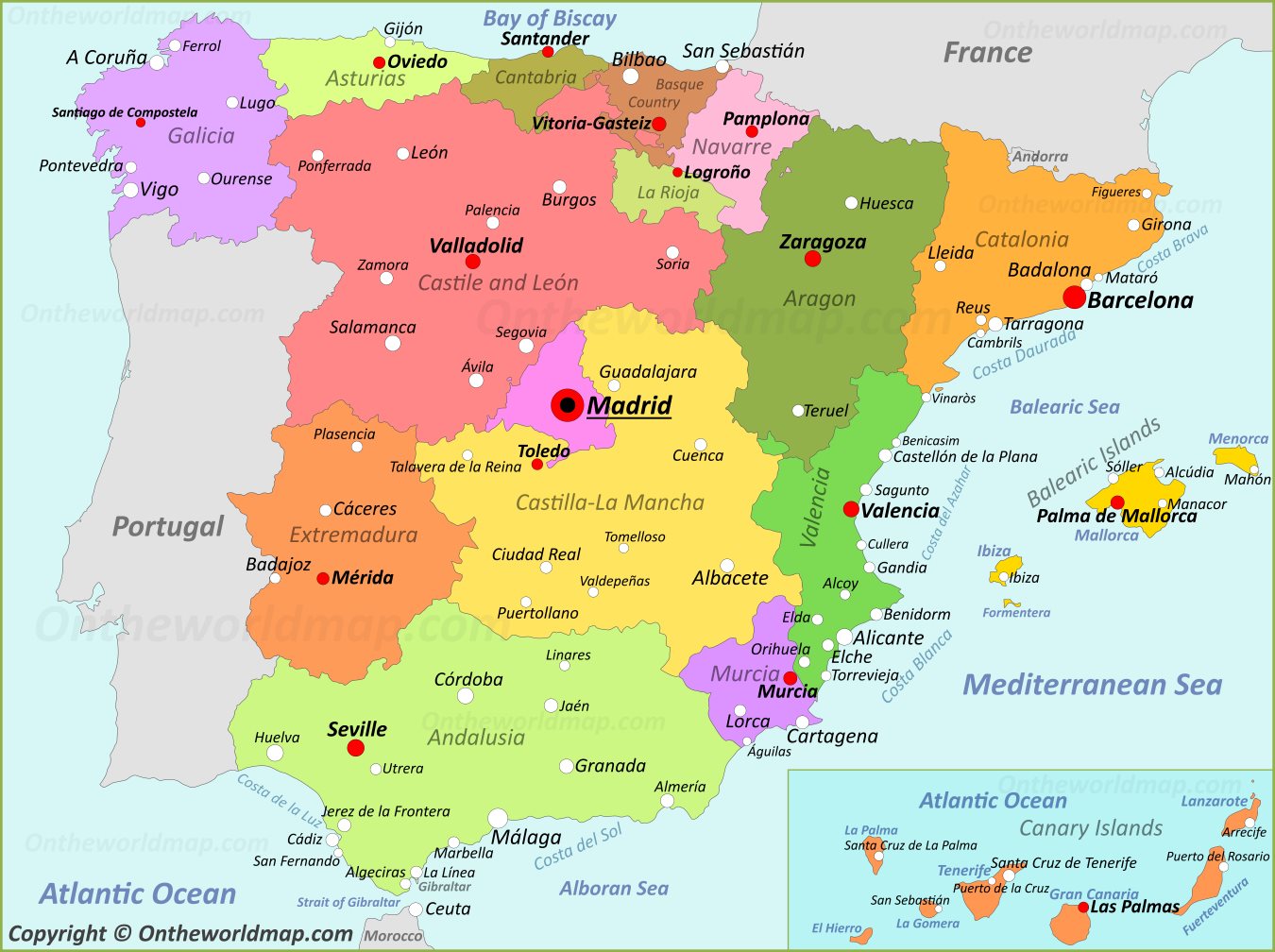
After Franco died and the dictatorship ended in 1975, Spain sought to rebuild itself. In the Basque Country, transportation was one of the key issues, as the region’s stakeholders sought to become leaders in this field.
In 1979, the Statute of Gernika granted the Basque autonomous community exclusive powers over railways, land, sea, and inland waterway transport, and over ports, heliports, and airports serving departures from or arrivals to the Basque Country.
Other matters fall within the competence of the state government, with rail operations being run by Renfe for instance.
Studying this region through the lens of transportation is all the more relevant given that the 100-kilometers corridor between Irun, on the French border, and Bilbao is home to one million people, creating a particularly high population density that contributes to the transportation system’s success in terms of ridership. Today, Spain’s Basque Country is a source of inspiration in the field of mobility for public transportation, particularly road-based transport, at both national and EU levels.
In 2024 and 2025, Euskadi3’s three capitals – Bilbao, San Sebastián, and Vitoria – introduced ZBEs (Zona de Bajas Emisiones, low-emission zones equivalent to France’s Zones à Faibles Émissions) and extended the 30 km/h speed limit citywide. In 2020, Bilbao was already the world’s first city with over 300,000 inhabitants to impose a 30 km/h speed limit across all its roads4.
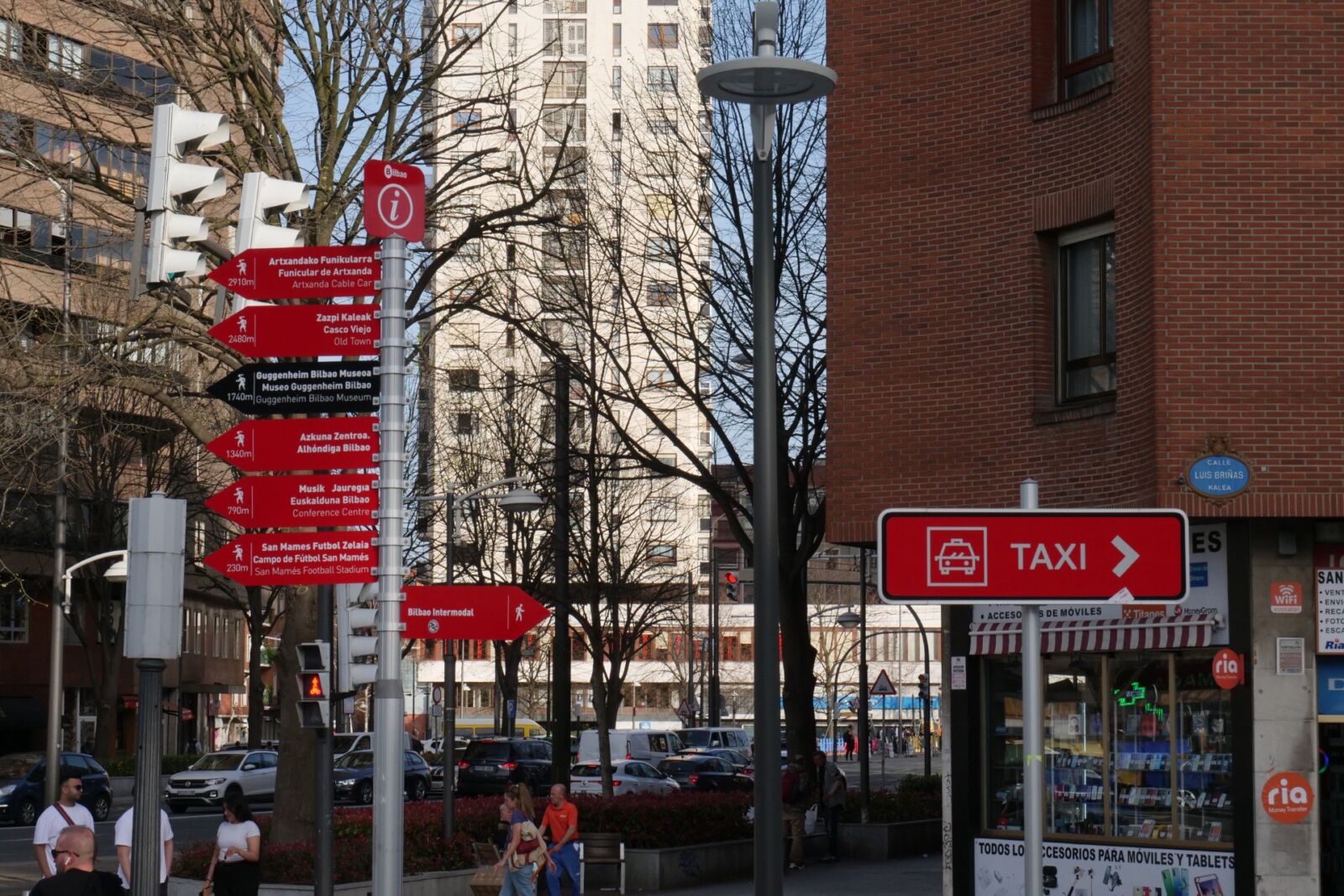
In the Spanish Basque Country as a whole, the mode share of walking is as high as 42 %. This average of course masks disparities across areas (60 % in Bilbao) but it remains significant when compared with France: the walking mode share in the French Basque Country is 15 %, and in France only the Ile-de-France region – an outlier in many aspects – reaches 40 %5.
A closer look at this walking habit reveals several factors behind such a high walking mode share: sociodemographic characteristics (including a high proportion of older residents – 25 % of the population) and urban form (topography and density, including in smaller cities). This is largely borne out in cities such as Bilbao and San Sebastián, which have some of the densest neighborhoods in Europe. Bilbao, in particular, is a very dense city, with neighborhood population densities ranging from 15,000 to 25,000 inhabitants per km², broadly comparable to the city of Paris (20,000/km²).
However, it would be a mistake to attribute the success of the Spanish Basque Country’s transportation system solely to population density, as San Sebastián’s (3,100/km²), for instance, remains significantly lower than France’s 10 largest metropolitan areas, behind Strasbourg and Toulouse. Nonetheless, the number of public transportation trips – by road and rail – is as significant as that of London (with a population density of 5,500/km²): in 2024, it amounted to 194 trips per inhabitant per year, compared with 200 in the UK capital. Thus, density alone is not sufficient to explain the high walking mode share.
At the same time, Spain in general has a strong public-space culture. Public spaces are designed with pedestrians in mind, even in medium-sized and small cities. For example, in another region, in Pontevedra, Galicia, pedestrians have long been a top priority of public policy through the “Mejor a pie” (“Better on foot”) policy, which states that “La movilidad peatonal es la forma más saludable y natural de desplazarse” (“Walking is the healthiest and most natural way to travel”) and that “La movilidad peatonal debe tener, como mínimo, la misma importancia que la movilidad motorizada, tanto en la normativa de aplicación como en el diseño, mantenimiento y gestión de las vías urbanas” (“Pedestrian mobility should have, at a minimum, the same importance as motorized mobility, both in regulation and in the design, maintenance and management of urban roads”)6. Car use has been made more difficult (speed limitation and parking restriction) since 19997.
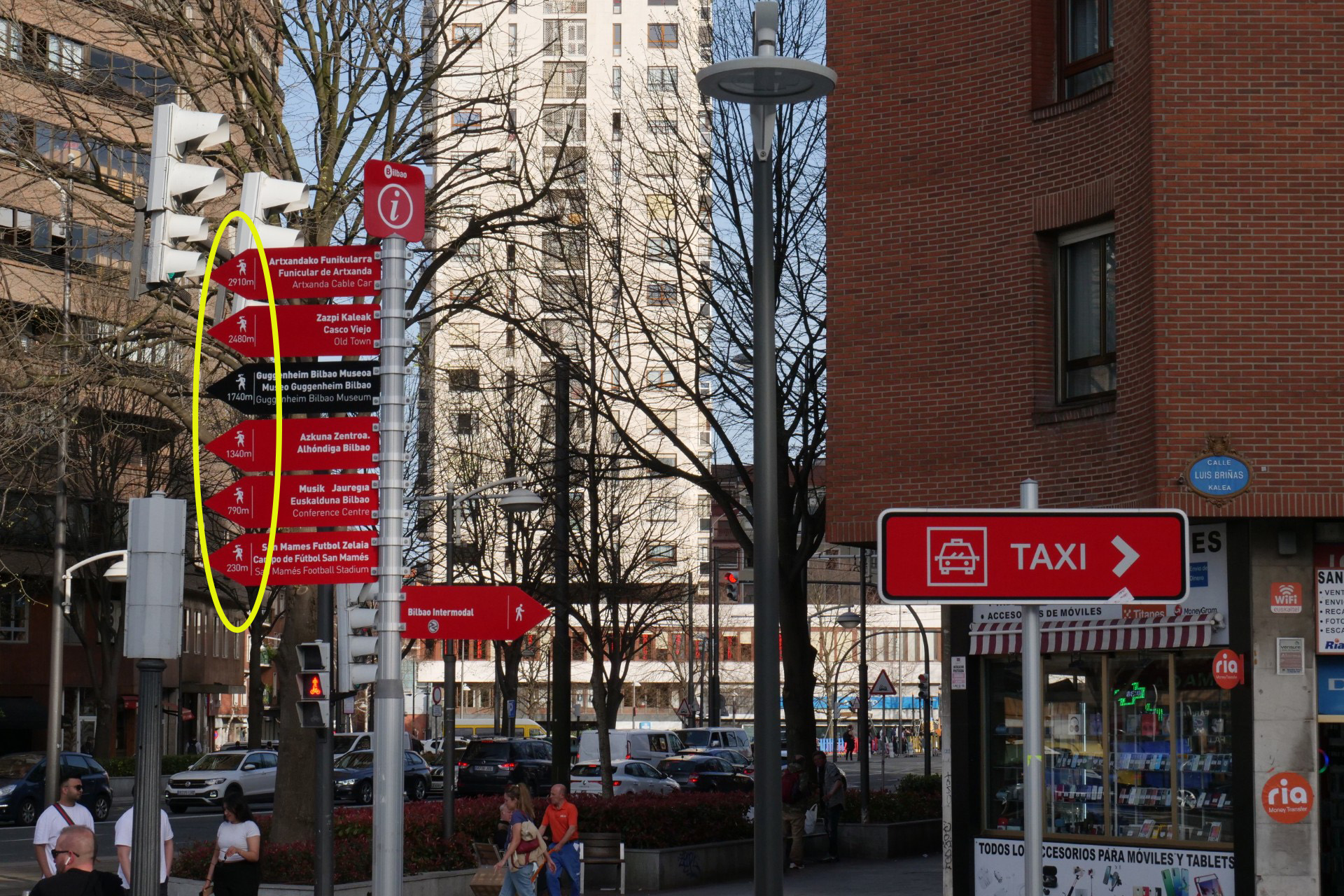
In Spain, intermodality with public transportation is also primarily oriented toward pedestrians, particularly for commuting trips and access to local services. The Basque Country is no exception, actively fostering this dynamic, supported by a very strong public transportation system .
The region appears to have struck a good balance between decarbonizing commuting and promoting proximity: public transportation services are comfortable and dependable, and public spaces are welcoming to all. But the ambition goes further, as in Spain public transportation is widely seen as an “everyday right” (derecho). It is expected to provide access to hospitals, universities, beaches, etc. – places that are therefore all served, beyond employment areas.
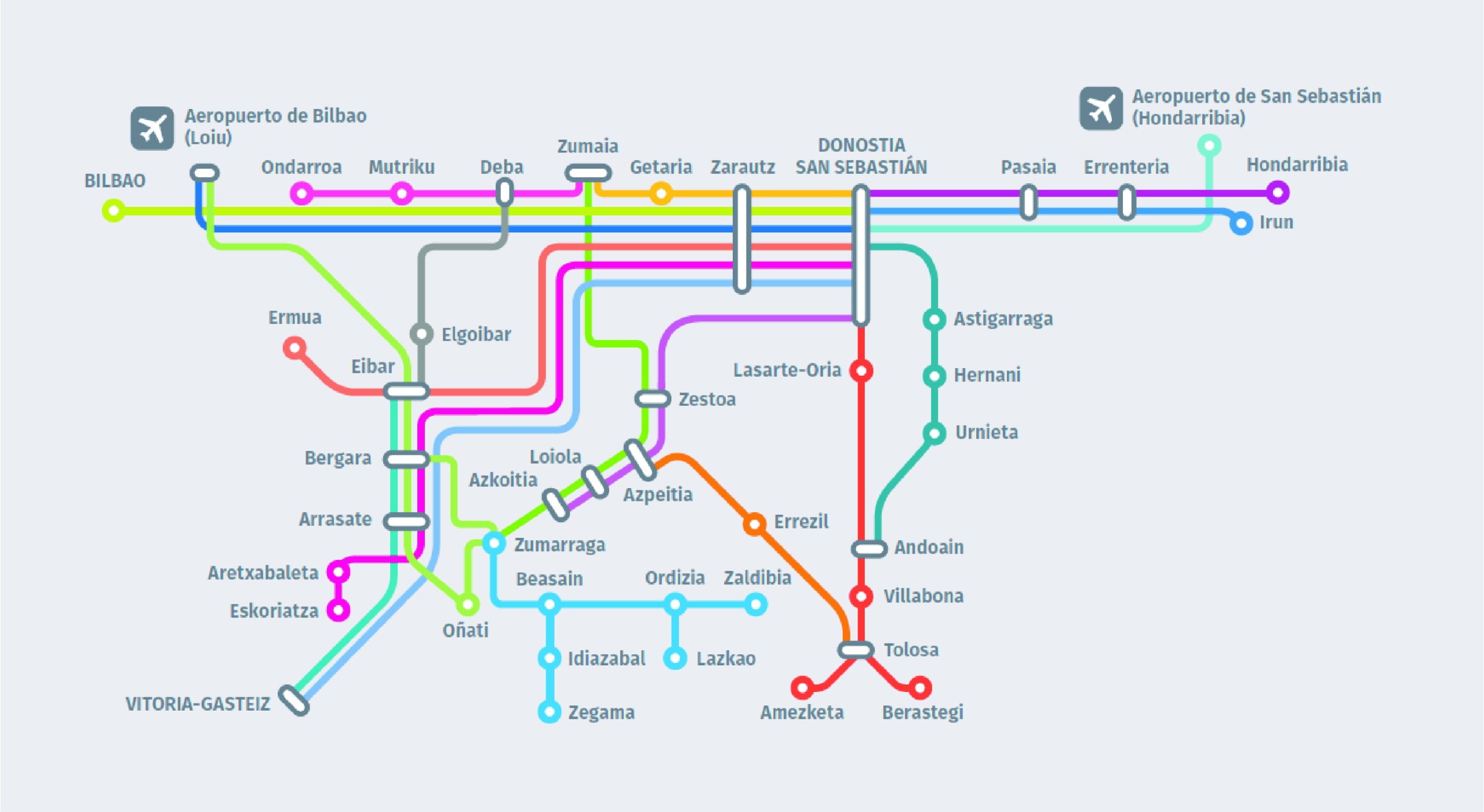
The extent of intercity bus services is a good example of what the Spanish Basque Country is capable of in this area, to the point that its intercity bus network is on par with the city bus networks in many French cities in terms of frequency, quality, and reliability. The Lurraldebus network generated over 26.5 million trips in 2023, excluding school transportation. In addition, transportation is free for children under 12, further enhancing its attractiveness.
The exclusion of school transportation from these figures highlights the success of intercity services in the Spanish Basque Country. By way of comparison, Tisséo, the mobility authority for Greater Toulouse, reported 38.8 million city bus trips in 20238, a figure that includes school transportation – which accounts for one quarter of its routes (41 out of 161).
In Biscay, the northwestern part of the Basque autonomous community that includes the Bilbao metropolitan area, 78 % of the population lives within 5 minutes of an intercity bus stop, and 92 % within 10 minutes. This does not even include city transit networks. In San Sebastián (188,000 inhabitants), the public transportation operator Dbus reports 194 trips per inhabitant per year, a figure roughly comparable to those of the metropolitan areas of Madrid (3.2 million inhabitants) and Barcelona (1.6 million inhabitants).
In France, only a dozen departments – including those in the Île-de-France region – stand out. In Haute-Garonne, only 84 % of inhabitants can access public transportation (whether city or intercity) within 10 minutes of their home; the figure is 76 % in the Pyrénées-Atlantiques and 51 % in the Landes9.
Workforce availability in the transportation sector, a key factor in its success, appears to pose fewer challenges than in France. According to the managing directors of Biskaibus and Dbus, this is a fairly well-regarded profession, and transportation companies are viewed positively by the population. This is partly linked to the exclusion of school transportation services from operators’ responsibilities: bus drivers have more stable working conditions – full-time contracts and standard schedules – and higher salaries than in France – up to €3,000 in Madrid, compared with €1,800–2,500 in France10 (the purchasing power gap is all the more significant given that Spain’s gross minimum wage stands at €1,323, compared with €1,767 in France11).
Intercity departure figures recorded at the region’s three main bus stations confirm their success: 1,200 daily departures from Bilbao, 600 from Vitoria-Gasteiz, and 600 from San Sebastián. Developing bus stations was clearly essential!
The Vitoria-Gasteiz bus station handles 600 intercity buses per day. It is located in the immediate vicinity of tram and bus lines and offers 200 bicycle parking spaces (including 94 inside the station). At street level, passengers can access city buses and bike-sharing services; underground, there are metro and commuter rail connections. In 2024, the terminal served 4.1 million passengers. In addition, according to the EU-funded SUDOE Stop CO₂ project, it ranks among the top five stations in Spain and among the best in Southern Europe in terms of energy efficiency12.
The Donosti-San Sebastián station has three levels and 21 bays, and also handles 600 intercity buses per day, with a total daily footfall of 11,000 passengers.
The Bilbao intermodal station – the most recent one, built in 2019 – is integrated into a building comprising student accommodation, a 168-room hotel, and 5,800-m² retail space for lease. Split across four levels, it has 29 bays and handles 1,000-1,200 intercity buses per day (23,000 passengers daily). Designed to improve the user experience, its waiting areas are more like those found in airports, being accessible only to ticketed passengers and, notably, enclosed to prevent passengers from inhaling exhaust fumes from buses at the bays.
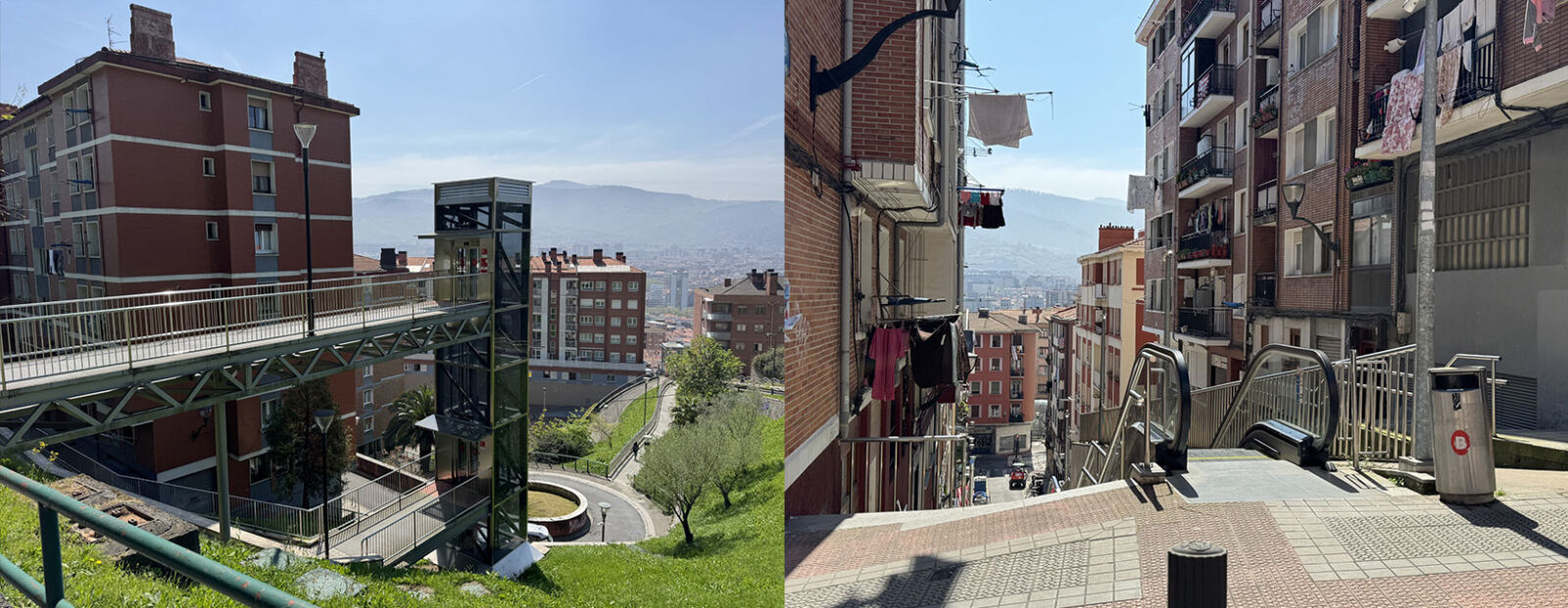
Another illustration of how well mobility is embedded in the Basques’ daily lives? Vertical mobility! In the Bilbao metropolitan area, solutions enabling “the ascent of the city” have expanded significantly. They help make the city’s highest neighborhoods more accessible: 70 elevators, 20 mechanical ramps, and a cable car carried approximately 22 million passengers in 2024.
This is not a particularly energy-efficient solution, but it is an inclusive one for more vulnerable populations in a city characterized by steep terrain… Its limitation is strong demand: an increasing number of residents are requesting the installation of an elevator in their neighborhoods. Further questions arise: does this qualify as active mobility? Which mode(s) of transportation does it replace – driving or walking? If it replaces walking, should such infrastructure be encouraged? Finally, from an urban planning perspective and in light of the multiple challenges facing cities (land take, need for urban greening and land restoration, energy transition, etc.), is this emerging form of mobility desirable?
In the Spanish Basque Country, unlike in France, there is no employer-subsidized mobility allowance. Public transportation is financed through high-fare revenues (tickets and passes) generated by strong ridership, as well as public subsidies facilitated by the Basque Community’s taxing power. The system is therefore more conventional than its neighbor’s: fare revenues cover 35-50 % of mobility services, compared with an average of 30 % in French metropolitan areas (excluding Paris)13.
In terms of infrastructure, the Basque government combines transformative transportation projects (metro extensions and new lines) with urban development initiatives (multimodal hubs), thereby better integrating mobility into urban policy and helping attract co-funding (EU funding, private partnerships). The system is also based on long-term transportation service concessions.
The primary limitation of the Basque intercity buses is their popularity: the system has reached full capacity. Operators are unable to accommodate demand during the morning rush (7-9 a.m.). In this regard, saturation is evident even at bus stations, whether in Biscay or in Gipuzkoa. Operators and elected officials are now, for instance, looking forward to the opening of the Donostialdea metro in San Sebastián to help redistribute passenger flows, although its introduction requires a challenging reorganization of the Lurraldebus network.
If investments do not keep pace – additional trainsets, line extensions, increased frequency – the system could then experience reduced reliability and passenger satisfaction.
In a nutshell, the region’s characteristics mentioned earlier (topography, density, population age structure, and cultural factors) facilitate the use of public transportation, which generates high fare revenues and enables investment in user-experience improvements, while reducing costs through attractive tiered fares14 : the more you use public transportation, the less you pay. Indeed, regional cards (BAT, MUGI, BARIK) enable interoperable fares across provinces, with pricing based on users’ social category and decreasing with usage (discounts of up to 72 % for frequent passengers).
The risk? A very effective model, but potentially unable to keep pace with ever-growing demand – and contrary to the principle of sufficiency?
The Spanish Basque Country’s approach seems to rest on the quest for better public health care and a more pleasant living environment, rather than on transport decarbonization and the systematic drive for modal shift away from cars. Having access to buses or being able to reach points of interest on foot means having the right to travel freely thanks to public services and infrastructure while being protected from air pollution. This priority is visible even at bus station bays, where waiting areas are enclosed to prevent passengers from inhaling polluted air from buses at the bays (which do not always turn off the engine during their short stops). A transportation policy centered on user experience, offering solutions for both commuting and other travel purposes (health care, beach trips, etc.), which could serve as an inspiration for us in France. Indeed, if our goal is to enable our fellow citizens to leave their cars at home more often, transportation options must serve all trip purposes and all user profiles.
14 résultats
Autonomous communities are Spain’s territorial entities, each with a distinct level of self-government as defined by the Spanish Constitution of 1978.
Statute of Autonomy of the Basque Country. https://www.euskadi.eus/web01-ejeduki/en/contenidos/informacion/estatuto_guernica/en_455/index.shtml
Basque name of the Spanish Basque Country.
https://rue-avenir.ch/themes/villes-a-30/espagne/bilbao-passe-100-de-ses-rues-a-30-km-h/
APUR, Mobility Changes in Greater Paris – Grand Paris – Historical Trends, Current and Emerging Developments (French), June 2021. Évolution des mobilités dans le Grand Paris (revised version) | Apur
Concello de Pontevedra. (2020). Mejor a pie. Retrieved on August 26, 2025, from https://ok.pontevedra.gal/es/mejor-a-pie/
Video illustration: https://www.youtube.com/watch?v=aToZB3ZtX-U
Tisséo collectivités, 2023. Chiffres clés – Les mobilités, notre cœur de métier au service de tous. https://tisseo-collectivites.fr/sites/default/files/media/downloads/chiffres_cles_2023_web.pdf
UFC-Que Choisir, L’UFC-Que Choisir révèle les « zones blanches » de l’accès aux transports publics, November 26, 2024. https://www.quechoisir.org/action-ufc-que-choisir-plus-de-10-millions-de-francais-sans-alternatives-a-la-voiture-l-ufc-que-choisir-revele-les-zones-blanches-de-l-acces-aux-transports-publics-n132694/
Insee (2024), Salaire minimum et coût de la main-d’œuvre dans l’Union européenne, données annuelles de 2000 à 2024. https://www.insee.fr/fr/statistiques/2402214
Ayuntamiento de Vitoria‑Gasteiz. (May 28, 2019). Premio a la estación de autobuses de Vitoria‑Gasteiz como una de las mejores del sudoeste europeo en eficiencia energética. https://blogs.vitoria-gasteiz.org/medios/2019/05/28/premio-a-la-estacion-de-autobuses-de-vitoria-gasteiz-como-una-de-las-mejores-del-sudoeste-europeo-en-eficiencia-energetica/
French Senate Information Report No. 117 (2018-2019), submitted on November 8, 2018, Mettre les nouvelles mobilités au service de tous les territoires, https://www.senat.fr/rap/r18-117/r18-1177.html
https://www.bizkaia.eus/es/web/comunicacion/noticias/-/news/detailView/26519?utm