
Mise à jour le 30 October 2026
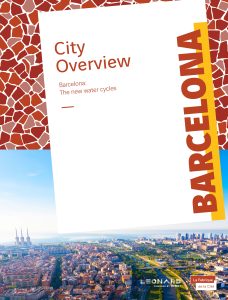
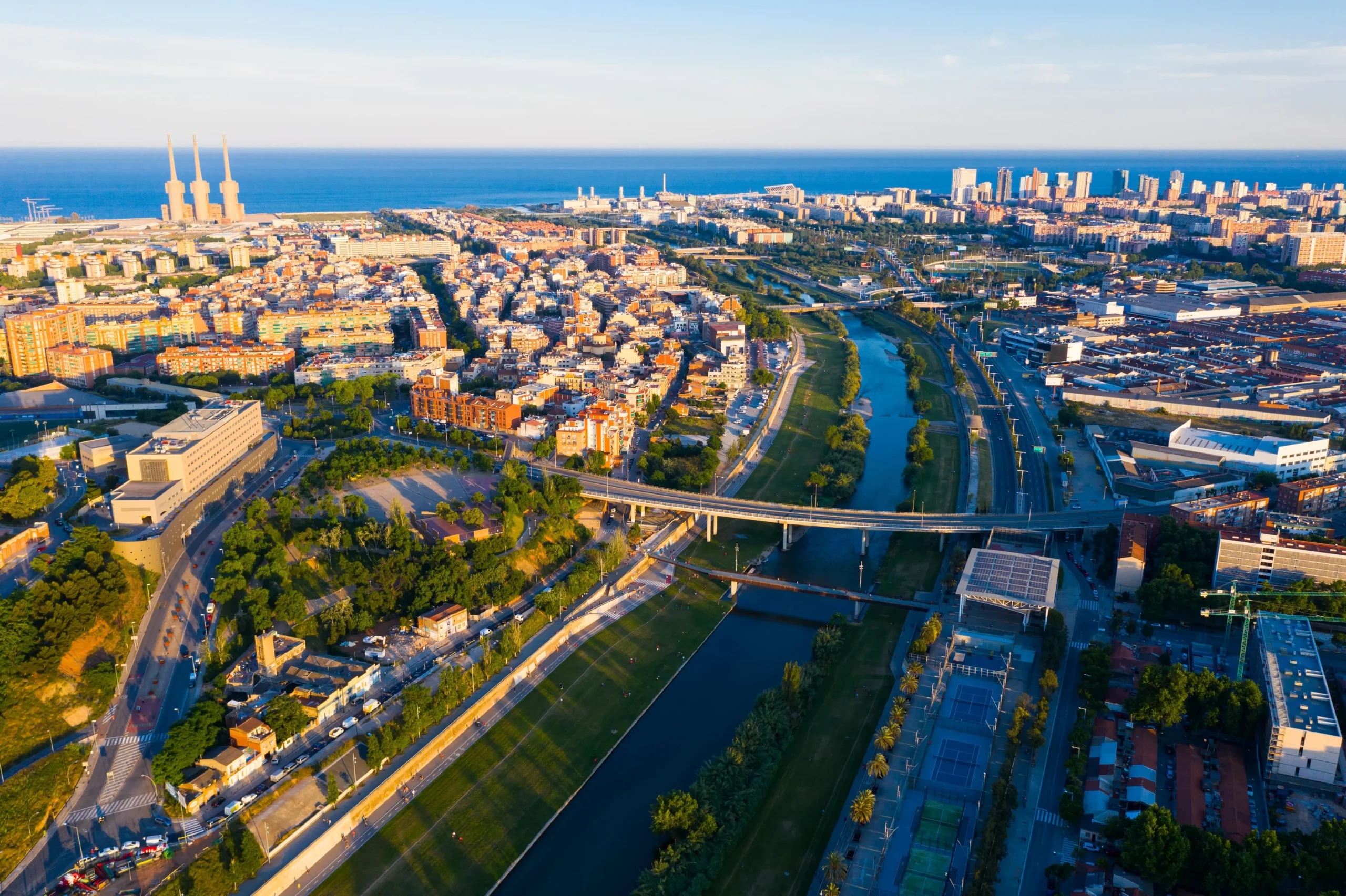
In July 2026, Leonard and La Fabrique de la Cité traveled to Barcelona to study the city’s new water cycles. The trip provided an opportunity to discover iconic projects in a city that is constantly adapting to its physical and hydrographic limitations.
90% of natural disasters are related, directly or indirectly, to water. Either scarce or overwhelming nowadays, changes in hydrological patterns are happening on a global scale.
“Water-related risks are systemic. Even among OECD countries, none is really spared from water-related issues.” (Oriana Romano, Head of Department of Water Governance, Blue economy and circular economy, OECD).
Yet the total amount of water on Earth remains constant. What changes is its availability, potability, quality, and capacity to be stored, distributed, and returned to the natural environment… all while seeking to consume large amounts at the same time and in the same place.
For centuries, Barcelona regularly faced water shortages. In 1953, rainfall that was half the normal amount led to water outages as early as May. In 2008, Catalonia went through several severe droughts. And the years 2021 through 2024 rank among the driest on record. On July 8th this year, the Fabra Observatory of meteorology, built at the end of the 19th century on Mount Tibidabo, recorded the hottest temperature ever in Barcelona since 1914: 40°C (104°F).
Faced with both water and demographic pressures – which are common challenges faced by Mediterranean cities – Barcelona must therefore balance different water uses and several supply strategies. The city is undoubtedly an emblematic case study of the contemporary issue of water management. From the historical legacy of domestic cisterns and bioclimatic patios to modern seawater desalination infrastructure and transformative projects, the city exemplifies a deep commitment to constantly adapting to its territory’s physical and hydrographic limitations.
2026 is a particularly important year for Barcelona, as it honors the memory of Antoni Gaudi (1852-1926), a figurehead in Barcelona’s architectural history– and Ildefons Cerdà, the father of modern urbanism and urban planning in Barcelona. From June 28 to July 2, 2026, the World Architecture Congress was held there under the theme “Becoming. Architecture for a Planet in Transition”1. In a city shaped by its relationship with water, this international event highlights the city’s ability to reinvent itself and bring together nearly 10,000 architects, urban planners, and researchers from around the world.
To see the rest of the feature on Barcelona, download it above.
1 résultat
World Congress of Architects. Barcelona. UIA 2026. https://uia2026bcn.org/fr/