


Mise à jour le 09 October 2026
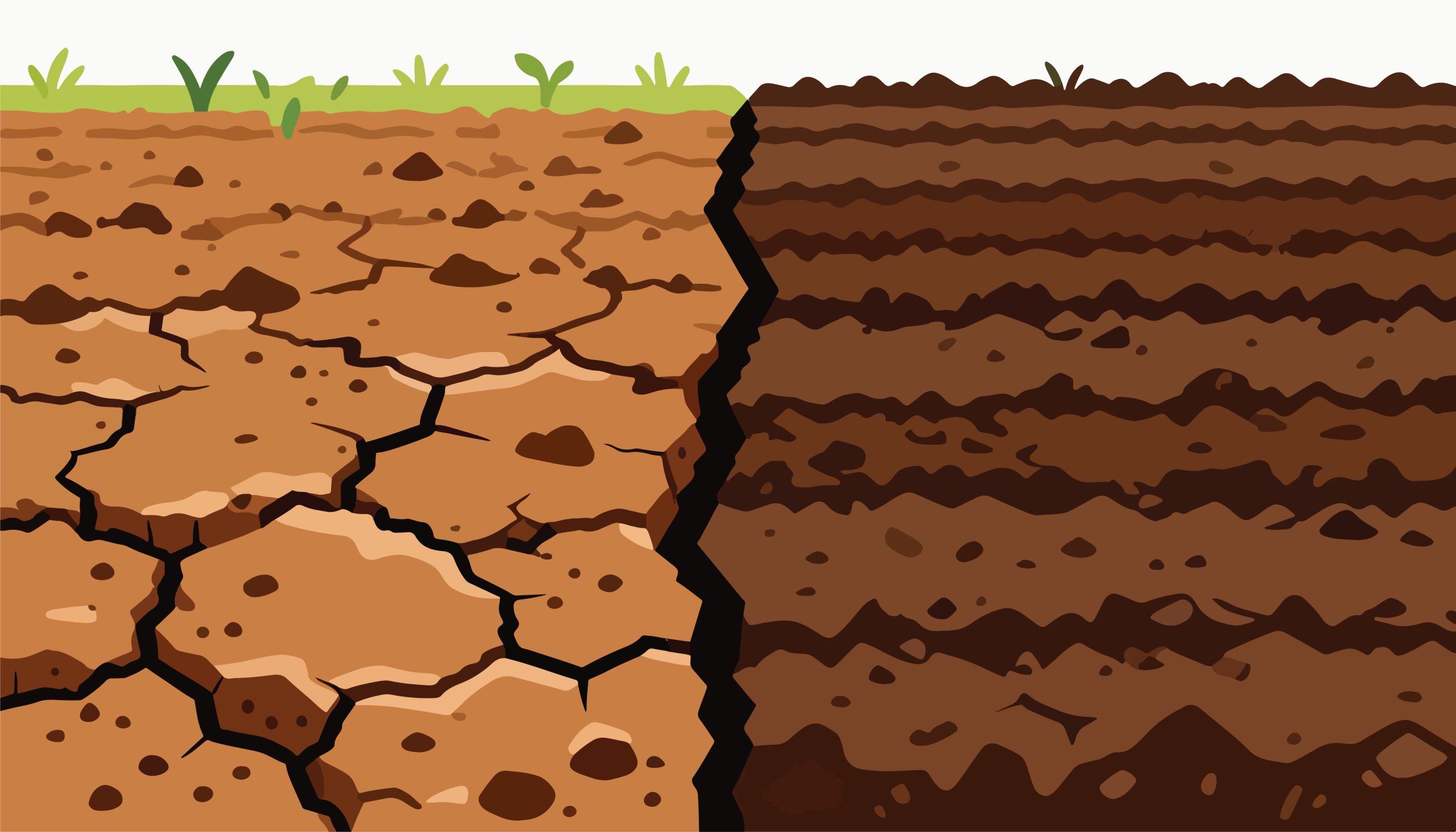
Addressing the green transition quite naturally involves paying attention to the quality of water, air, and biodiversity. Soil is less debated, yet it is the very element underpinning the condition of water, biodiversity, and air. One statistic is often used to illustrate just how rich the soil beneath our feet is: a single teaspoon of soil holds more organisms than there are human beings on the planet.
Then why is soil richness so rarely discussed? What are the risks of not giving as much importance to the condition of soil as to that of water and air – or even more?
La Fabrique de la Cité has been working for several months, in collaboration with experts, academics, and practitioners, on developing a common approach to soil health and methods for caring for it.
We met with Mirco Barbero, Team Leader of the Soil Team in the European Commission’s Directorate-General for Environment.
Mirco Barbero: Soils provide us with a very wide range of ecosystem services!
They provide food, as well as wood and biomass for energy. They also play a fundamental role in the water cycle, absorbing and filtering the water that replenishes underground aquifers. With climate change, soil contains most of the Earth’s organic carbon after the oceans, and it could store even more. In this regard, the French “4 per 1000” initiative1 aims to help increase the amount of carbon stored in soils. Soils also form the foundation of terrestrial ecosystems and their biodiversity.
If we want soils to continue providing us with these many services, we must safeguard their health. Plus, contaminated soil can pollute the water we drink, the air we breathe, and the food we eat. there is a fundamental link between soil health and human health.
Mirco Barbero: There are multiple sources of soil contamination, especially from intensive agriculture or industrial activities, such as pesticides, heavy metals, microplastics, and PFAS, also known as “forever chemicals.” And each pollution source has its own characteristics.
For example, some fertilizers used on agricultural soils contain cadmium, a heavy metal that builds up in soil and ends up in our food.
Another source is industrial pollutants that also accumulate in soil and can contaminate water. Not to mention microplastics and nanoplastics, which are also present in both water and air and are extremely difficult to detect and remove, or avoid.
Mirco Barbero: It isn’t the only issue at stake: a large share of the damage related to floods or droughts can be linked to poor soil conditions. When soil is healthy and kept in a natural state, it is able to absorb large amounts of water, even during intense rainfalls.
Thus, it is important to assess certain catastrophic events beyond a pure climate change perspective: while climate change increases the frequency of extreme rainfall or high-temperature events, healthy soils help mitigate the damage.
It is therefore essential to minimize the loss of this capacity to infiltrate and absorb water, which can result, for instance, in ? land take in cities.
In short, safeguarding healthy soils means maintaining our quality of life, because soil invites us to think in the long term: if we exploit soil today in a way that degrades its health, we may gain economic benefits in the short term, but we will incur greater losses in the long term.
Mirco Barbero: I think one of the reasons is that addressing soil health is more expensive than addressing the condition of water or air. However, it is crucial to weigh these monitoring and analysis costs against the losses caused by soil degradation.
Improving knowledge of soils could cost about €50 million per year, but we estimate the losses from soil degradation – in other words, the cost of inaction – at €50 billion. We fundamentally need a better understanding of soils to inform decisions and reduce hidden costs. Fortunately, there is a growing awareness.
Based on this observation, the European Commission launched a soil-focused research mission2 which plans to provide €1 billion over seven years to fund more than 60 research projects and 11 living labs on soil. The goal is to make the knowledge about soils generated by these projects available to all stakeholders – scientists, policymakers, and the general public.
Mirco Barbero: Soils require global solutions, but also local ones, within each country and each territory. We therefore need data and a shared framework to determine which parameters should be measured, how to compare and learn from one another and use this data at the local level. The Soil Monitoring Law , which came into effect in December 2025, is also a major step forward. Before this directive, there was no EU regulation specific to soils.
The law establishes a framework in all Member States, with shared methodologies for assessing soil health. It aims to harmonize / align the density and quality of soil data across the EU. The law has built consensus on what should be defined jointly and what should remain at the discretion of Member States.
In addition, it helps strengthen the community of experts working on soils and better showcase their work.
The Soil Monitoring Law3 means a lot: we are at a somewhat magical moment, with work on soils accelerating. It offers a real opportunity to bring about positive change: 25 Member States have expressed their agreement, demonstrating a genuine consensus throughout Europe on the importance of caring for soil health.
Mirco Barbero: We sought to take the best from each context and demonstrate both ambition and pragmatism. Some countries have made remarkable progress in decontaminating polluted sites, such as Belgium and the Netherlands, while others have focused on monitoring and curbing land take – France and Italy, for instance. In France, the 2021 Climate and Resilience Law paved the way for discussions on integrating the concept of soil functions into land-use planning. Italy developed a very precise system for monitoring land take, which is updated yearly and makes it possible to get extensive data on the impacts on ecosystem services. So we looked at the best existing practices, but we also developed a shared framework that takes into account differing baseline situations and implementation challenges.
Mirco Barbero: Solutions involve several lines of action. First of all, minimizing the impact of land take – and attempting to offset it as much as possible – while also considering housing and infrastructure needs. In this respect, Article 12 differs from France’s Zero Net Land Take objective, as it focuses on the impacts of land take on soil health and the loss of ecosystem services. The directive also includes a chapter on contaminated site management: how to establish a public, comprehensive inventory based on risks, in order to reduce risks to an acceptable level for human health. Additionally, the law is designed to support land managers (farmers, forestry professionals, etc.) in areas where soil condition is considered poor, through information and advice.
The Soil Monitoring Law is very special because it requires the European Commission to draft, within the next one to two years, a series of guidance documents and resources for Member States to implement it: supporting soil monitoring, defining appropriate thresholds for action, identifying priority contaminants, etc.
The law is the first step toward a long-term vision that will require regular updates. The directive is already scheduled to be revised in 2033, in seven and a half years.
Mirco Barbero: It should be pointed out that soils are part of the solution to many of the problems and challenges we face – floods, droughts, climate change adaptation, biodiversity loss, and issues related to water quality and food production.
At the same time, when we buy a product, just as it has a carbon footprint and a water footprint, it also has an impact on soils, all of which depend on the production methods used.
I think it is equally important to inform people about the health benefits. Recent scientific studies have shown that spending time in forests or working the soil can strengthen our immune system, for instance, because soil shares many of the same components as the gut microbiota and nourishes it. We have forgotten all the services that soil provides us. Essential compounds such as vitamin B12 are produced in it, as are certain antibiotics. People living in cities have been shown, on average, to have less healthy gut microbiomes, whereas gardeners have better immune systems!
We use soil, but we know little about it: for instance, 99% of soil bacteria are still poorly understood. We know more about the stars than about the soil beneath our feet. Yet soil is the foundation of all forms of life and represents an immeasurable reservoir of solutions for our future.
Interview by Louise Fel, Project manager at La Fabrique de la Cité
3 résultats
The international “4 per 1,000” initiative, launched by France on December 1st 2015, at COP21, aims to demonstrate that agriculture, and agricultural soils in particular, can play a crucial role in food security and climate change. It seeks to bring together all willing stakeholders from the public and private sectors – states, local authorities, companies, professional organizations, NGOs, research institution, etc. – under the framework of the Lima-Paris Action Agenda. Drawing on solid scientific literature, the initiative encourages all partners to promote and implement concrete actions for soil carbon storage. Source: https://4p1000.org/decouvrir/
https://environment.ec.europa.eu/topics/soil-health/soil-monitoring-law_en